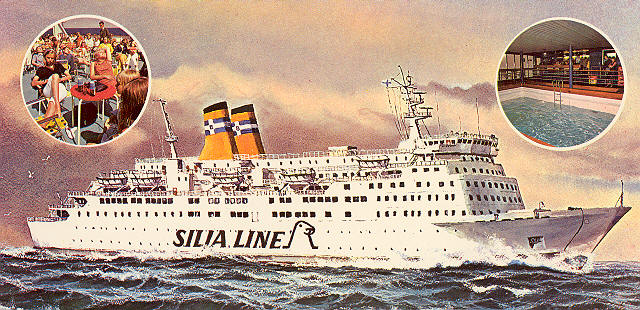
Showing posts with label Pappa's Girl. Show all posts

Friday, 23 November 2012

The Next Big Thing?


I’ve been invited by Chris Chalmers, author of the wonderful award-winning novel, Five to One (he blogs at www.chrischalmers.net ) to take the Next Big Thing questionnaire, where authors talk about what they’re publishing next.

So here goes...


What is the title of your next book?

Pappa's Girl 

Where did the idea for the book come from?


The idea for Pappa's Girl first came to me when I took part in a non-fiction seminar during the last term of my MA in Creative Writing at Bath Spa University. I immediately thought of writing about Finns who emigrated to Sweden in the 1970's. Instead, however, a story about a fictional family grew in my mind, and I wrote a short piece for my next class. Eventually on firm advice from my excellent tutor, Lucy English, I changed my MA project at the last minute and started writing Pappa's Girl.   

What genre do your book fall under?


Romantic fiction.

Which actors would you choose to play your characters in a movie rendition?

This must be the most difficult question! I think I'd love to see Finnish actors 'do' all the parts but really couldn't tell you who. Can I take a rain check on this one…?

What is the one-sentence synopsis of your book?


Emotionally anaesthetised by her displaced childhood, and her parents' violent break-up, Swedish teacher Ulla learns how to love and be loved through going back to her Finnish roots.

Will your book be self-published or represented by an agency?


Pappa's Girl will be published on Kindle later this month.

How long did it take you to write the first draft of your manuscript?

Three to four months. Finishing it has taken me years, though!


What other book would you compare the story to within your genre?

There is an excellent Swedish novel on the same subject, Beyond, by Susanna Alakoski. It's much darker than Pappa's Girl.  The novel has also been made into a film starring the then married couple Noomi and Ola Rapace. (You may have noticed I have something of a crush on Ola, but I digress).


Who or What inspired you to write the novel?

The inspiration for Pappa's Girl came from my mother. Although the novel is not biographical by any stretch of imagination, I wanted to write about some of the difficulties I knew she had encountered when she first moved from Finland to Sweden.


What else about your book might pique the reader’s interest?

As well as a story of love, Pappa's Girl, also shows the reader, through the eyes of an 11-year-old girl, Ulla, what it's like to move to strange new country, where according to her beloved Pappa 'everything is bigger and better'. 


And that's it! I hope you enjoyed reading about My Next Big Thing. I will now pass the task of answering these same questions to another writer. Next week in the spotlight will be the veritable authoress and blogger extraordinaire, Karen Gowen.  

I look forward to reading about her new project.

Wednesday, 17 October 2012

Writing again!

I've been notable by my absence on this blog lately, but I have an excellent excuse…well, I think so anyway.

I'm writing again, or rather re-editing a manuscript which will become my next Kindle ebook. It will be out (hopefully, please keep all fingers and toes crossed) on 17th November and is called Pappa's Girl.

In  1974, 11-year-old Lisa and her family emigrate to Sweden from Finland. Although on the surface a happy family, the move unhinges their relationships. Thirty years later, Lisa is unable to forget what happened, but when her beloved grandmother is ill, she decides to make the journey from Stockholm to her home town of Tampere.


I am really enjoying the re-edit (or even rewrite…), here's hoping the manuscript will be ready for my editor in time. Wish me luck!


Friday, 12 October 2012

Final day of FREE ebook!


It's gone very quickly - but TODAY is the final day of the FREE promotion for 

So, if you want to read How I Came to Be in England in novel form for 
absolutely no money whatsoever 
hurry! 

With 5 star reviews on Amazon, pick of the month at The Alliance of Independent Authors, it's a complete steal in my humble opinion...

The promotion at Amazon ends midnight tonight.


Finally, for all those who've asked me when the next book, Pappa's Girl, is out, I can tell you that the date set is for 19 November 2013!

Saturday, 21 May 2011

Pappa's Girl: Jävla Finnar


It was exactly four weeks after our move to Rinkeby in Sweden in the autumn of 1971, when Pappa took me to Stockholm Stadium to see Finland play Sweden. I’d not been to an ice-hockey match since Ilves played Tappara in the Jäähalli in Tampere the previous winter. My team lost to their local rivals. The boys at school who wore the black and orange Tappara scarves laughed at me. But I didn’t give up my green and blue Ilves scarf just because of one game.

In Sweden nobody knew of the Finnish league, but this annual tournament was a question of pride for the two countries. Pappa had been given the tickets by his boss in the factory because he couldn’t go himself.

‘You have no idea how expensive these seats are,’ he said. ‘And how difficult to get hold of,’ he continued. He was talking to Anja. ‘And I’m not going to waste them on a person who ruins beautiful new sofas.’

My sister Anja just shrugged her shoulders. ‘It wasn’t me,’ she said, and looked down at her feet. A few days ago Pappa had found a cigarette burn on one of the velour cushions. I looked at Anja and wondered how she could be so brave. If Pappa found out about the party she had in the flat he’d hit the roof.

‘What did you say?’ Pappa said, taking hold of Anja’s arm.
‘Ouch, you’re hurting me!’ Anja freed herself and ran out of the hall.
‘Hadn’t you better be leaving?’ Mamma said.

I was very proud to be taken by Pappa to the match instead of Anja. In Tampere I went to ice-hockey matches with my friend, Kaija. We both played on the ice-rink two blocks from our flat with the boys from our school. To be allowed to play, we had to wait till there weren’t enough boys to make up a team. One boy, Jussi, who was in my class and had curly brown hair and short stumpy legs, shouted, ‘Do your figure skating in the corner, girlies!’ He had all the latest gear, fancy leather gloves much too large for his hands, pads for his knees and a shiny new stick, which he rolled around with one gloved hand often dropping it with a bang on the ice. Kaija sat next to Jussi in class and said he was really sweet, but she only said that because she had a crush on him, had had for ages. They lived close to each other too, and often walked home together. She’d told me that if there were no other boys around Jussi would hold her hand. Kaija was a short girl with round face and straight thin hair. Pappa called us ‘Pitkä ja Pätkä’ after a Finnish version of Laurel and Hardy. Getting ready for the match I decided to write to Kaija about it later that evening. I wondered who her new best friend might now be. I’d received one letter from her but she said nothing about school in it. It was already October so she must have found someone by now. I wished Kaija would be coming to see Finland play Sweden with me.

The match was played in the evening in the large stadium in the centre of Stockholm. We wore our warm coats and I put on my Ilves scarf and hat.
‘There’ll be lots of people but very few Finns, so best keep together, OK?’ Pappa said as we parked the new Volvo. Pappa had washed it earlier that morning and its bonnet gleamed under the streetlights. I turned to look at the dark, round building in front of me. There were people hurrying towards it. We were late. Pappa took my hand and we started running. He looked at the tickets and then up at the signs on doors. I held tightly onto Pappa’s hand when we walked up steps and saw the vast ice rink in front of us.  People had to stand up to let us in, we were right in the middle of the row.
Tack, tack,’ Pappa said and I smiled. But nobody looked directly at us. They just stared at the rink in front of them.

The players were already out warming up. They smashed the bucks against the solid white edges, snapping their sticks fast and hard.
‘There’s Harri Linnonmaa, look, number 75!’ Pappa said pointing at a player in blue and white with a picture of a lion on his chest. ‘The Finnish Lions will beat the Swedish wimpy white-bread men,’ he whispered into my ear when the players skated up to the side and disappeared underneath us. Soon after they all came out again in a line and stopped dead when the Swedish national anthem was played over the Tannoy. Everybody stood up. Pappa and I were the only people not singing. After the Swedish anthem I felt awkward knowing the words to ‘Our Land’, but Pappa sang loudly, clearly pronouncing each Finnish word.

When the Finnish national anthem was over, the game started with the two attackers fighting for the puck in the middle of the rink. Pappa rubbed his hands together and muttered, ‘C’mon Finnish Lions!’

The Swedish players wore their blue and yellow shirts with an emblem of three crowns on them. They all had very blonde, long hair which escaped from underneath their helmets. Pappa had told me the crowns represented the three monarchies Sweden had once ruled.
‘Now they don’t even dare take part in wars, let alone win them, the cowards!’ he’d said. He told me Finns had earned their emblem through having to fight for their independence. ‘Like lions we are fearless and proud,’ he said.

‘I think we’ll win, Lissu, because the Swedes are scared,’ Pappa now said. ‘Finland won the first leg of the tournament in Helsinki. If only they can hold until half time, they’ll win.’ He smiled and nudged me with his elbow.

The whole of the stadium exploded when the first goal came. But Pappa and I sat still. By the end of the second period, Finland was 9 goals down and Pappa had an Elefanten beer in the dark, cold hall downstairs. People around us were standing in groups laughing and smoking. They were mostly Swedish men, like my father drinking beer.
‘Can I have a tunnbrödsrulle Pappa?’ I said. He looked at me and without saying a word gave me the money. I ran to a food stall and back again as quickly as I could. Thankfully Pappa was still there when I came back. He’d finished his beer and the bell was sounding for the start of the third period.

‘Never mind,’ Pappa said when we sat down again, ‘We have time to come back.’

But it got worse. Time after time Finnish players were sent to the sin bin, leaving the Swedish blondes free to score more goals. Three more times the buck ended up in the Finnish net. The Swedish players hugged each other and the crowd cheered. Pappa said nothing. The Finnish goalkeeper hung his head, while his teammates got angry with the Swedish players. Yet another Finn was sent to the sin bin. At one time there were two Lions sitting there, holding their sticks between their knees, staring ahead at the terrible result on the board opposite them.

‘Let’s go,’ Pappa said suddenly. The game wasn’t finished yet and people looked angrily at us when they had to move up from their seats. One man with a huge belly and a round face said, ‘Jävla Finnar’ when I passed. I didn’t look at him.

The dark streets outside were completely empty. We heard another loud cheer rise up from the vast stadium. Pappa walked fast to the car and quickly started the engine. He was quiet all the way home. When we pulled into the car park outside our block of flats I said, ‘Can we go again?’

Pappa looked at me and said, ‘No.’

This is an excerpt from my novel Pappa's Girl. If you liked the story, you can find more here.

Friday, 8 April 2011

Pappa's Girl Part 5

Stockholm 1971


‘This part of town is called Rinkeby. It’s ten stops on the Tunnelbana from the centre of town,’ Pappa told us, ‘That’s what the underground train is called.’
We were walking up the stairs to the second floor of a large block. Our flat was the fourth door along a covered walkway. I counted the doors so that I would find it again. When we arrived it was dark and there were orange lights along the walkway.  Inside the hall was large and square and led into a big kitchen on the left and into a bathroom on the right. By the window in the kitchen there was a round table. It had a plastic tablecloth and four wooden chairs. You could see the walkway and the car park from the window. 
From the hall you could see straight into a large sitting room. There was no furniture apart from an old-looking sofa against the wall, but there were large windows with glass doors. Light brown curtains were hanging either side. Pappa went to open the door. ‘Come and look at this,’ he shouted from the balcony. 
‘There is another door into our bedroom,’ Pappa turned around to look at us standing in the doorway. 'Come in - you're allowed to!' 
Mamma, Anja and I went to stand on the cold cement floor of the balcony. ‘The new furniture should arrive next week,’ Pappa said and squeezed Mamma's waist.
‘What new furniture?’ I whispered to Anja but she just shrugged her shoulders. ‘How am I supposed to know?’
Both Anja and I had our own bedrooms. Mine had a low bed made out of white wood against one wall. Anja’s room was opposite. She’d chosen hers first but I didn’t mind. Pappa looked at me and said, ‘You sure Lisa?’
‘Yes Pappa, I like this room,’ I’d said.
‘Come on girls, let’s make up your beds,’ Mamma said. She took tightly rolled sheets from her large suitcase, laying open in their bedroom. She handed me a pale blue set and Anja a pink one. Apart from the colour, they were both exactly the same. You could tell which was the top sheet by a narrow strip of embroidery at one end. Mamma helped us make up the beds and told us to go and wash in the large bathroom and then to sleep.
‘It’s past eleven o’clock Swedish time, ‘ she said. ‘And that’s past midnight in Finland.’
It felt strange going to bed in Stockholm. I didn’t feel at all sleepy, so I lay on my back under the sweet smelling sheets listening to the noises around me. Mamma and Pappa were talking in muffled voices and Anja was moving about in her room. There were no sounds of cars. At home I could always hear the traffic go past our house. I wondered what Kaarina was doing now. She was probably asleep on one of the beds in her small bedroom. I wished I could kiss her goodnight.
My skin felt prickly all over at the thought of tomorrow.
The walls of my new room looked very white, they glowed even though the room was dark. I could see a street lamp through the curtains. It’s light painted a long orange strip along the wall and the door. I’d left my door ajar, it felt too lonely to shut it completely. I heard Mamma laugh softly. Then she said, ‘Shhh, Mikko.’  I turned to face the door and thought about what Rinkeby would look like in the daylight. Would there be a children’s playground outside the flats here too? Would my school be a tall building like Anja’s new school in Tampere? What were Swedish girls like? I wished I’d find a friend like Kaija and that my teacher would be a nice person like Neiti Päivinen. She never got angry with me, or the others. I’d heard her shout only once at a boy who kept pulling the girls’ hair. But he was horrible and smelt of cooked cabbage. Oh, I hoped there'd not be lots of boys like him in my new school.   

In the morning Mamma knocked on my door.
‘Breakfast is ready,’ she said. Anja was still asleep but Pappa was reading a newspaper in Swedish at the kitchen table. He looked over the paper at me and said, ‘Sleep well, Lissu?’ That was his nickname for me. He hadn’t used it for ages, so I smiled and said, ‘Yes Pappa.’
There was a funny smell in the kitchen like fried onions. Mamma said it was the strange furniture and that when she’d cleaned the flat properly, the smell would go.
‘Your nose, Lisa, is very sensitive,’ she laughed. She was smiling, unpacking boxes in the kitchen. It was nice to see our old cups and plates. Then Mamma found one plate that had broken during the move. Pappa said it was a very expensive Nuutajärvi glass plate, but that it was lucky nothing else was broken.
‘I told you we shouldn’t have taken everything,’ he said to Mamma. But he didn't sound angry. 
Mamma just looked at the large chip on the plate and said nothing. I thought how lucky it was that my doll was in Kaarina’s cellar.
After we’d had breakfast around the kitchen table, Mamma said, ‘Lisa have you unpacked everything in your room?’
She knew I hadn’t so I got up. I walked along the corridor past Mamma and Pappa’s new bedroom and went in to have a look. At the far end the door to the balcony was open. The air was blowing the white, long thin curtains about. Mamma had put the old yellow bedspread on the large double bed. At the foot of the bed was a row of wardrobes. I opened one narrow door and saw Pappa’s winter shoes and his heavy Ulster hanging above it. I closed the door quickly.
The room looked very tidy even though there were two large suitcases and several unopened boxes stacked on the floor. On either side of the bed was a small table, and a white lamp screwed onto the wall above. I flicked the switch and a bright light came on. I imagined Pappa lying on the bed reading a newspaper, his legs crossed and his socks shiny and loose on his feet. Sometimes he fell asleep like that in the middle of the afternoon with the paper folded neatly next to him, his arms crossed over his chest.  I closed the door quietly behind me and went to my room.        
My bedroom had a white desk against a large window overlooking a path between the house blocks of the estate. I could see a group of boys cycling there. They were shouting to each other while peddling without holding onto the handlebars, or pulling the front wheel up off the pavement. They laughed, daring each other to do more tricks. Suddenly one of them looked up and I moved behind the thin cotton curtain.
‘Do you want to come to the shop with me,’ Mamma was standing at the door. She looked at my unopened boxes.
‘Yes please!’ I said.
‘You’ll have to promise me you’ll unpack as soon as we come back.’ She wagged her finger at me but she was smiling. ‘Take your coat. It looks warm but there is a wind and it’s a bit of a walk, I think,’ she said from the corridor. Then Anja stood there, sleepy-looking.
‘Are you coming to the shop?’ I asked.
‘Yes, Mamma wants me to come because I can speak Swedish,’ she said and walked out. She wasn’t even dressed yet so I knew it would be a while before we left. I sat down on my bed and opened one of the boxes.

On the way to the shop we walked past the boys on their bicycles. I tried not to look at them, but I saw from the corner of my eye that they were still being silly. I wondered if they went to the same school Anja and I would start the following Monday. That was the day after tomorrow, I thought.
‘Can you believe we’re here?’ Mamma said and linked arms with us. Anja said, ‘It’s so cool, there are so many girls here the same age as me. I saw them walking on this path.’
Mamma pointed at a low building in the distance and said, ‘That’s your new school.’ She knew where everything was because she’d been here with Pappa before. Pappa had shown her the flat and they’d walked around to our new school and met the teachers.
‘Wow,’ Anja said. ‘So cool!’
We walked along the path. It went under a road. In the tunnel our voices made an echo and we laughed. Then there was a long uphill road and steps up to square. At one end was a shop with glass door. Inside the shop smelled of sweet fruit. There we large baskets of bananas and apples, mounds of tomatoes and different coloured peppers. Pappa was right, everything was bigger and better in Sweden. Anja and I found the sweet aisle and looked at the different unfamiliar packets. They all looked so delicious, but I had left my money in the new flat.
‘Let’s see if Mamma will buy us some,’ Anja said and took my arm. We ran along the isles and isles of foodstuffs, finally finding Mamma at the bread counter.
‘Ah, Anja, thank goodness. I want some of those cakes but the lady doesn’t understand and I can’t say it,’ she said. Mamma looked red in her face and the woman had her eyebrows raised.  She wore a white apron and had very blonde, curly hair. She said something but Anja didn’t understand her either. Anja pointed through a glass case at a green cake that had four ready-cut slices left and put up four fingers and said something in Swedish. The woman didn’t reply but took a knife and slid the four slices into a cardboard container. Then she closed the lid and wrote a number on it and handed the box to Anja. We all smiled and said, ‘Tack’, and the woman said something again but didn’t smile. Anja shook her head to her and we left.
Mamma had lots of food in her trolley. ‘I’m ready, let’s go,’ she said. Her face was still a bit red and she looked sad. ‘She was very rude, that woman!’ she said to Anja.
Anja shrugged her shoulders and said, ‘Can we have some sweets?’
Mamma looked at her and said, ‘Alright, one each.’ ‘But not a big one,’ she shouted after us. A woman with an equally full trolley was coming the other way and we nearly bumped into her. I said, ‘Anteeksi’. She looked at me angrily and I realised I’d said ‘sorry’ in Finnish.
Jävla Finne,’ The woman said and pushed her trolley away.
‘Come on,’ Anja said.
‘What did she say?’ I asked Anja. She was pulling my arm and we were running. Anja didn’t reply, so I thought she didn’t know either.
‘What’s sorry in Swedish?’ I asked when we were standing in the fully stacked sweet aisle again.
Förlåt,’ she said and picked up a heavy bar wrapped up in a golden coloured paper.
‘I’ll have the same,’ I said. Then, looking at her I said carefully, ‘Vorlat?’
‘No, you copycat, it’s FÖR - LÅT!’ 
'That's not what that woman said to me.'
Anja was quiet for a moment. Then, glancing quickly around her, she whispered in my year, 'She called you a Fucking Finn.' 

Tuesday, 2 November 2010

Pappa's Girl - Part Four

It's 1971 and Lisa and her family are about to emigrate from a small town in Finland to the Swedish capital, Stockholm, where 'Everything is bigger and better,' as Pappa tells Lisa before they leave their home country. To find Parts 1-3 of this tale click here.


We spent the night before going away in Grandma Kaarina’s flat.
‘Anja, Lisa - it’s time to get up!’ someone whispered close to my ear. It was still dark but there was a strip of yellow light coming from the hall. I looked over to my older sister. She’d pulled the blanket over her head. Whenever we stayed with Kaarina we slept on the sofa in the lounge. I had my head in one end and Anja in the other. Kaarina called it The Sister Bed. I turned towards Kaarina’s smiling face. Her cheeks were red and she had a net over her greying hair.
‘Good morning Lisa,’ she said and kissed my cheek. She smelled of medicine. I heard her false teeth clack. ‘Get dressed! I’ve got breakfast ready.’ She hurried out of the room. 

The floor felt cold to my feet when I skipped to the bathroom. It was still dark and I shivered in the little yellow loo. I smiled when I saw the irregular strokes Kaarina's paint brush had left on the walls. Pappa didn't like the bright colours she'd painted her flat with, but I loved them. 'She should have got a man to do it properly,' Pappa had said. Suddenly I remembered what day it was: we were leaving for Stockholm today. We would take the first train to Turku, then the ferry to Stockholm. I wondered if there’d be Swedish people on the train, or maybe not until on the ferry. It was called the Ferry Train so there must be foreigners on it. I wondered if I could tell them apart. The only foreign person I’d met was a boy in my class who’d moved from Australia. He couldn’t speak any Finnish at all so my teacher, Neiti Päivänen, asked me to look after him. He sounded strange, but didn’t look any different.

There was a knock on the door, ‘Lisa, we’re in a rush! You don’t want to miss the Ferry Train do you?’
I opened the door and saw Mamma was already dressed, though she hadn't put her lipstick on or done her hair yet. She reminded me of how Anja looked first thing in the morning.

‘You must have something to eat before we go. Here, put these on and give me your nightie.’ She handed me a pile of clothes, all new bought especially for the journey.  ‘And hurry up, darling!’ When I closed the door I heard her shout, ‘Anja, please get up straight away. You’re going to make us late!' 

It was still dark outside when we sat around the table eating bread, cheese and meats. I had a cup of milky coffee with three spoonfuls of sugar. It was sweet and felt warm in my stomach. I only managed to eat one piece of rye bread with liver pate. ‘Liver makes you strong,’ Kaarna had said so I took some although I didn’t really like it.
‘Anja, aren’t you having any breakfast?’ Kaarina said pouring more coffee into the cups.
Pappa was glaring at Anja. She was slumped over the table, looking like a lifeless doll. Her hair was a mess.
‘Did you hear what your Grandmother asked you?’ Pappa said.
‘Please have just one piece of bread,’ Mamma said. She sat next to my sister and stroked her back.
Anja shook her body so that Mamma’s hand dropped away. She looked straight at Pappa and said, ‘I’m not hungry.’
‘You won’t get any food until the ferry,’ Pappa said. Anja just shrugged her shoulders.
‘Sit down, Kaarina,’ Mamma said and smiled up at her, ‘this is a lovely breakfast.’ Kaarina sat down at her painting chair with a heavy sigh. She had on a stripy apron and a pink housecoat. She looked sad. ‘I’ll make you a couple of sandwiches just in case some-one gets hungry on the train,’ she said and glanced across at Anja's empty plate.
Mamma gave Pappa a quick look and said, ‘What a good idea. I’ll make them.’
‘Don’t be silly, Kirsti, you have to get ready. I don’t have anything better to do.’ Kaarina got up and smiled at me. Mamma gave in and rushed around the flat to get our things ready. 


Back in the lounge, I picked up the set of colouring pencils and a small drawing pad that Kaarina had given me for the journey and put them in my canvas holdall. I looked up and saw Kaarina in the kitchen through the narrow hall. She stood sideways, wiping her eyes with a kitchen cloth. Pappa was still at the table reading a paper. He put yesterday’s ‘Aamulehti’ down and looked at Kaarina. She sat down facing Pappa and he put his hand on her arm. I couldn’t hear what he said. Then Kaarina got up again and started clearing away the plates while Pappa carried on reading his paper. 


Anja sat on the unmade Sister Bed. ‘What a stupid idea to leave so early in the morning!’ She still hadn’t brushed her hair, nor packed her bag.
‘But this is when the Ferry Train goes,’ I said.
‘But if we’d taken the night sailing instead of the stupid, boring day one we wouldn’t have had to leave until much later!'
‘How do you know there are night ferries?’
‘Because I just do, ' Anja had a dreamy look in her eyes, ' The night ferry looks really good, they’ve got a disco and everything!’ She stood up and sighed, ‘Not that they would have let us go there.’ At last it looked like she started getting ready. Pappa was standing in the doorway, holding his paper.
‘Are you ready girls?'
‘Yes Pappa.’ I looked over to Anja who was examining her bag.
‘Anja?’ Pappa said.
‘Whatever,’ she said. Pappa stood still for a moment as if he was trying to find something to say.  Instead he took a deep breath and went into the loo. I followed Pappa out of the room and saw Kaarina leaning against the sink in the kitchen. Her head was bent over and I went to stand by her. This is where I often stood to dry the dishes while she washed up. I had no time to do that today. I looked up at her.
‘All packed?’ Kaarina asked. Her eyes were red and wet. I pushed myself against her large body and started crying.
‘Lisa, don’t start me off again,’ she said. I pulled away and looked at her. She wiped my eyes with her apron and smiled. ‘Soon you’ll be on that ferry and then Stockholm and you will have a wonderful time,’ she said and hugged me hard.
‘Don’t forget to open up the box with Charlotte every week.' I'd been worrying about my doll ever since Mamma had told me I should leave her behind. She was now in Kaarina's cellar in a cardboard box with my other toys. Of course I knew I was too old to play with dolls.
‘I won’t,’ Kaarina said. I hugged her again and thought how warm she was and how soft her cotton apron felt against my cheek.


‘The taxi’s here!’ Pappa shouted. Everyone started rushing. I went out first with Anja and ran down the stairs past her. Kaarina lived on the third floor but I always beat the scary lift to the ground floor. The taxi was waiting outside the entrance to the block of flats. I pressed my nose onto the cold glass of the front door. The taxi driver wound his window down and rested one arm on it. He wore a black leather jacket and was smoking a cigarette. He pursed his lips and made rings out of the puffs of smoke. I watched them rise and disappear into the air. He turned around to look at me, tapping the ash from his cigarette onto the pavement. His eyes looked small and watery.


The lift behind me came to life. The wires moved slowly inside the wire cage. The whole lift creaked and I was afraid it might give way under the heavy luggage. I watched when at first Pappa's brown shoes came into view, then his legs and finally his face. With a loud thump the lift stopped and Pappa stepped out into the hall. I helped him carry the suitcases one by one into the boot of the taxi.
‘Good morning,’ the driver said but didn't get up to help with the cases. Pappa told me to get into the car. I opened the passenger door and hang off it. I didn't want to get in before everyone else. Next Mamma and Kaarina came down in the lift. I heard them talking over the humming of the car engine.
‘Where’s Anja,’ Mamma asked.
‘I’m here,’ Anja said. She was standing behind Kaarina.
Kaarina came to hug me, ‘You’re a good girl,’ she whispered in my ear.
‘I’ll see you soon,’ Mamma turned away quickly from Kaarina and ushered Anja and me onto the back seat. I saw Pappa put his arms briefly around Kaarina and then let go. He went to sit next to the driver.
‘We are going to Keskusasema,’ he said to the man. When the taxi started to drive off I glanced back. The number '2' shone brightly above the doorway where Kaarina stood. She looked large but lonely, her arms hanging loose by her side.

Monday, 5 April 2010

Pappa's Girl - Part Three

My sister Anja turned fourteen the summer we moved to Stockholm. She was three and a half years older than me and always knew what she wanted, and usually got it. She was so beautiful everyone, including Pappa, found it difficult to refuse her. Besides, she had a way of speaking, of saying the right thing. I tried to do the same, but always failed. Anja's hair was straw-coloured, curly and thick, while mine was a shade darker than blonde, straight and thin. Anja also had the shapely legs from Pappa’s side, the calves just the right form, not too long and straight like mine.

On May Day that same year she was caught drunk in the centre of Tampere. Mamma and Pappa came out of the cinema and saw her sitting on a park bench next to an unknown teenage boy, a ‘junkkari, as Pappa called him afterwards. Anja had a half-empty bottle in her hand and Pappa said she could hardly speak.

‘I’ve never been so embarrassed in my life,’ Anja told me. ‘They dragged me away from an innocent walk in the park with my friends. I’ll never forgive Pappa,’ she said.

‘Pappa called the boy you were with a wastrel,’ I said.

‘I know, it’s so unfair,’ Anja said.

Mamma talked to Grandmother Kaarina about the move to Stockholm. We were standing behind Kaarina watching her paint the trunk of tiny round green tree on her picture. She was proud of Pappa for bettering himself, but Pappa didn’t approve of his mother’s new hobby.

‘It’s no hobby,’ she said to me and let me mix her colours. Sometimes she gave me an old canvas to paint on when I stayed with her. Now Kaarina turned her head away from the painting.

‘But Kirsti, rakas, Mikko has a job to go to that is well paid, doesn’t he?’ I worried the colours would dry and be wasted if Mamma didn’t let her carry on painting. The picture was of a very pretty town of stone houses and trees with a blue sky and white fluffy clouds on top.

‘Yes, but…’ Mamma replied, then saw me and stopped.

The next day Mamma was sitting on my bunk bed helping to pack my books. She said I should only take the grown-up ones, not the baby books.

‘You haven’t looked at those for a long time,’ she said nodding at a shelf. ‘We’ll put them in the storage boxes – you won’t lose them, they’ll be waiting for us at Kaarina’s.'

Grandmother would have to take a lot of stuff, I thought, and felt good that at least my teddy bear and doll would be in a safe home with her. They were baby things and I was nearly a teenager, not a child who played with dolls! Besides, Pappa kept telling us we couldn’t take everything.

‘We can buy new things in Stockholm,’ he said.

Anja had no difficulty in deciding what to take and what to leave – she’d finished her packing the day before and was sitting listening to the radio in the living room.

‘Anja, Mamma needs your help with the cleaning your room,’ Pappa said.

‘Why should I?’

‘Because it is your mess!’

‘And Lisa’s. We have to share a room, remember? Besides, she’s still packing, and the rest has nothing to do with me.’ Anja was looking through one of Mamma’s grown-up magazines.

‘Anja, we are all very busy packing, now please do as I say!’

‘Jag är färdig!’ Anja replied in Swedish.

Pappa stared at her, then came back to stand in the doorway to the bedroom. Anja turned the radio up when a song that she liked came on. Pappa glanced over to her but said nothing. I couldn’t wait to learn Swedish too.

‘Lisa will learn Swedish the quickest,’ Pappa said, leaning against the doorframe.

Mamma shot a quick glance at him

‘Why, surely Anja will? She’s already been studying it!’

‘As the youngest, Lisa will take to it like duck to water.’ He smiled at me. Seeing the look on Mamma’s face, he added, ‘Well, perhaps they’ll learn at the same pace.’

‘Anja will certainly have an advantage,’ Mamma said quietly.

‘How much are you expecting my mother to store? Some of it must be thrown out, don’t forget. Especially the old toys,’ Pappa kicked one of the boxes. Mamma looked at him and got up. Pappa followed her and I barely heard their raised voices above Anja's loud music. I looked at my old doll Charlotte and imagined how she’d like it in a dark box for months on end, perhaps years. That was a very long time. Would she smell musty like our summer cottage on a warm day in spring when we visited for the first time after the snow had melted and Pappa could drive the Triumph all the way up the lane? After Mamma had hauled all the bedding out and aired it, the place smelled the same as it always did: sunshine and flowers. Could you air dolls in the same way? I decided I’d ask Kaarina to take the doll out once a week.

Mamma appeared at the door again, ‘Lisa, you must finish your packing. The lorry will be here in a couple of hours!’ Then she came and sat next to me on the floor, ‘You little daydreamer; what are we going to do with you?’

‘I’m going to put Charlotte on the top. I don’t want her in a dark box all by herself,’ I said.

Wednesday, 24 March 2010

Pappa's Girl - Part Two

When Pappa told us that he could earn lots of money in Sweden if we all moved to Stockholm, I was twelve and nearly as tall as him. I could touch his shoulders without being on tiptoe.

Mamma worried about the future. I’d heard her say so to Grandmother Kaarina while standing in her kitchen. Kaarina was painting, and Mamma and I were watching her dab tiny amounts of blue, which she’d mixed with red, onto the canvas. Her kitchen smelt of white spirit and coffee.

Kaarina started painting right after Grandfather, or Vaari, died. I never knew him, but Pappa told me how sad Kaarina had been. First she made the walls of her flat different colours. The hall became orange, the small bathroom at the end of the hall yellow. It reminded me of the chicks Kaarina bought one Easter and raised to hens in her two-bedroomed flat. Pappa just shook his head when we came to visit and my sister Anja and I held the soft feathered things in the palms of our hands. Kaarina told me what he said when she'd painted the bathroom with a small brush, the uneven effect then being some thirty years ahead of its time, ‘At least not many people will see it.’ Kaarina used a roller on the other walls in her flat, even choosing a fairly light green colour for her lounge. And she left the kitchen white. Her small bedroom, which had two single beds side by side, one was always empty, she'd made orange like the tiny hall. Pappa said her mother would soon come to her senses, but I was so used to the multicoloured rooms that I later missed them in our pale-coloured apartment in Stockholm.

Kaarina seemed to love Mamma more than her son. They were always talking with Mamma’s blonde close to Kaarina’s black and grey hair . And they laughed and smiled at each other when we visited. I thought how pretty Mamma was in her light blue trousers and a pale yellow blouse. She didn’t wear much make-up, just some pale coloured lipstick.

Kaarina’s flat was just a walk away through the park from my school. After Anja had started at Tampereen Lysio, and left me alone in the junior school, I’d walk through the park to Kaarina’s place and watch her paint. Or she’d send me down for cakes in the bakery on her street. I skipped down the stairs, deciding not to risk the lift. It would only jolt at each stop, making me think one of the wires would give way and drop the cage with me in it all the way to the cellar. The lady in the shop knew Kaarina and gave me the best Mannerheim cakes, where the raspberry jam was still runny in the middle and the sponge soft and warm. My favorites, though, were Laskiaspullat, large sweet dough buns filled with whipped cream. They were only baked in February for the Sleigh Day when the street was slippery and I had to keep to the sanded bits to avoid falling. The round-faced woman behind the glass counter wore woolen gloves, without fingers, to keep the cold out as she placed the large buns, with tops like hats, in a clean, white cardboard box. ‘Tell Kaarina we’re baking a new batch of rye bread tomorrow morning,’ she might say to me as I took hold of the string loop she’d made for me to carry the box.

Kaarina and I had coffee sitting at the round table with a cloth with tiny roses on it and watched mothers push their babies in prams up and down the street. Or see children playing in the sandpit outside her house, or on the two swings. When I was little, I used to play there too, and sometimes Kaarina would come down and push me higher and higher on the swings. Now they made an awful jarring sound and Kaarina said they should be fixed or replaced, ‘The little ones will get all sorts of disease from the rust on those iron chains, or hurt themselves on the splinters from the chipped seats.’ Watching people come and go, she told me who they were, and sometimes wave at someone. She was disappointed if they didn’t respond, after she had knocked on her fifth-floor window so hard, that I was afraid she’d break the glass.

When Mamma came to fetch me Kaarina squeezed me hard in her large uneven bosom and said, ‘You’re a good girl, Lisa.’ Then moving away she’d re-adjust her fake breast and go over to the window to wave us goodbye.

Saturday, 6 March 2010

Pappa's Girl


Tampere 1971
Perhaps it was the violence, perhaps the unpredictability of the event, to me at least, that afterwards totally coloured my life. Before then, I had been Pappa’s girl, in a way that my sister wasn’t. She was so difficult that Mamma always worried about her. As soon as I was born Pappa took a liking to me so it was easier for Mamma.


We lived in a tiny flat on the outskirts of Tampere, Finland. From our living room there was a view of the large cemetery with its imposing statues. A solid red brick wall sheltered the dead from the road between us, and the tree-lined rows of headstones. There was one bedroom and a kitchenette, separated from the living room by a stripy yellow and red curtain. Both the rooms had large windows. The flat occupied a corner of the house and had two aspects: one to the road and the cemetery, one to the children’s play area between our block and the next. These were flats built after the war; made of solid stone, made to house the new generation. Three of them stood side by side, guarding the cemetery and the road, with young families, like us, inside.

My sister Anja was two and a half when I emerged quietly and with little pain to my mother. She’d walked two kilometres to the maternity hospital, Naistenklinikka, past the cemetery to the centre of town. Pappa and Anja were still asleep when the phone call came that another little girl had been born prematurely. There was disappointment in Pappa’s voice, I was told later. He'd been desperate for a son, but when Mamma came home with me, and Pappa held me for the first time he said: ‘This little girl I like! We'll call her Lisa, after Mona Lisa with the mysterious smile.’ From that moment on Pappa was my hero and I could do no wrong.

Pappa was a big man with blue eyes but delicate feet and hands. Those hands could fix anything: a broken vase, a punctured bicycle tyre, a creaky door. His mouth was curved, and when he smiled his eyes had a kind look, instead of the sad one he usually wore. When times were good, he’d joke and make up stories whilst I sat on his lap, tugging his flabby earlobe between my thumb and forefinger. The softness of Pappa’s earlobe made me dreamy, the silky feeling of it comforted my whole being as I rested my wispy blonde hair against his strong chest. I believe we were both happy then.
In Stockholm everything changed.

Picture source: R. Branthin 22.1.1957, Tampereen museoiden kuva-arkisto.